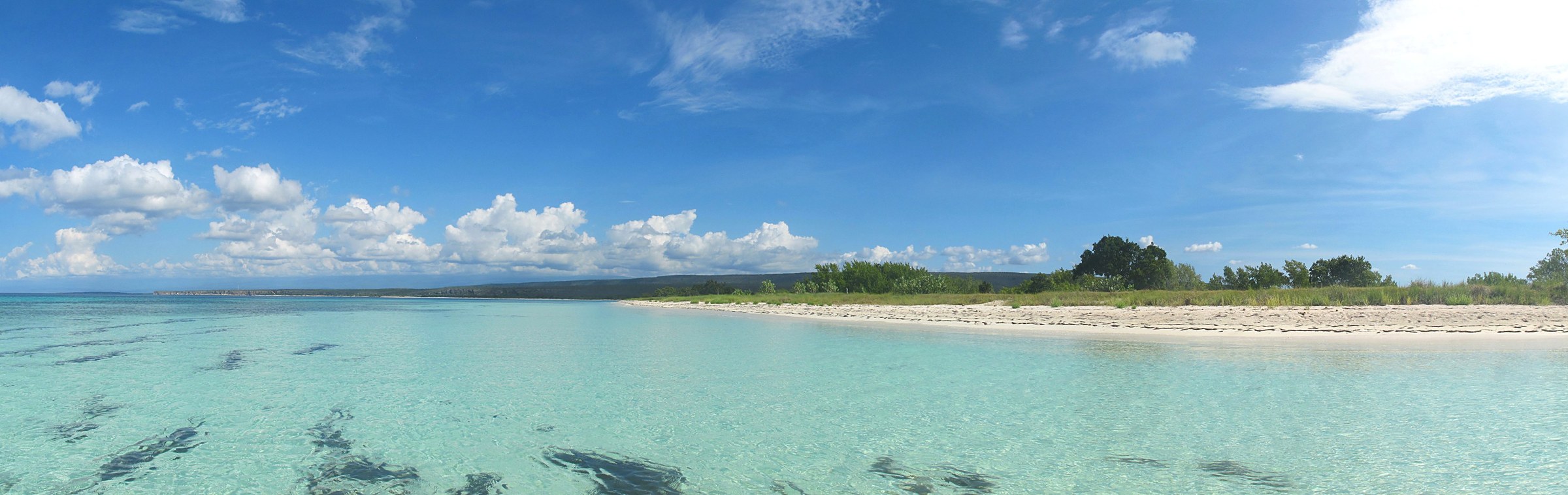
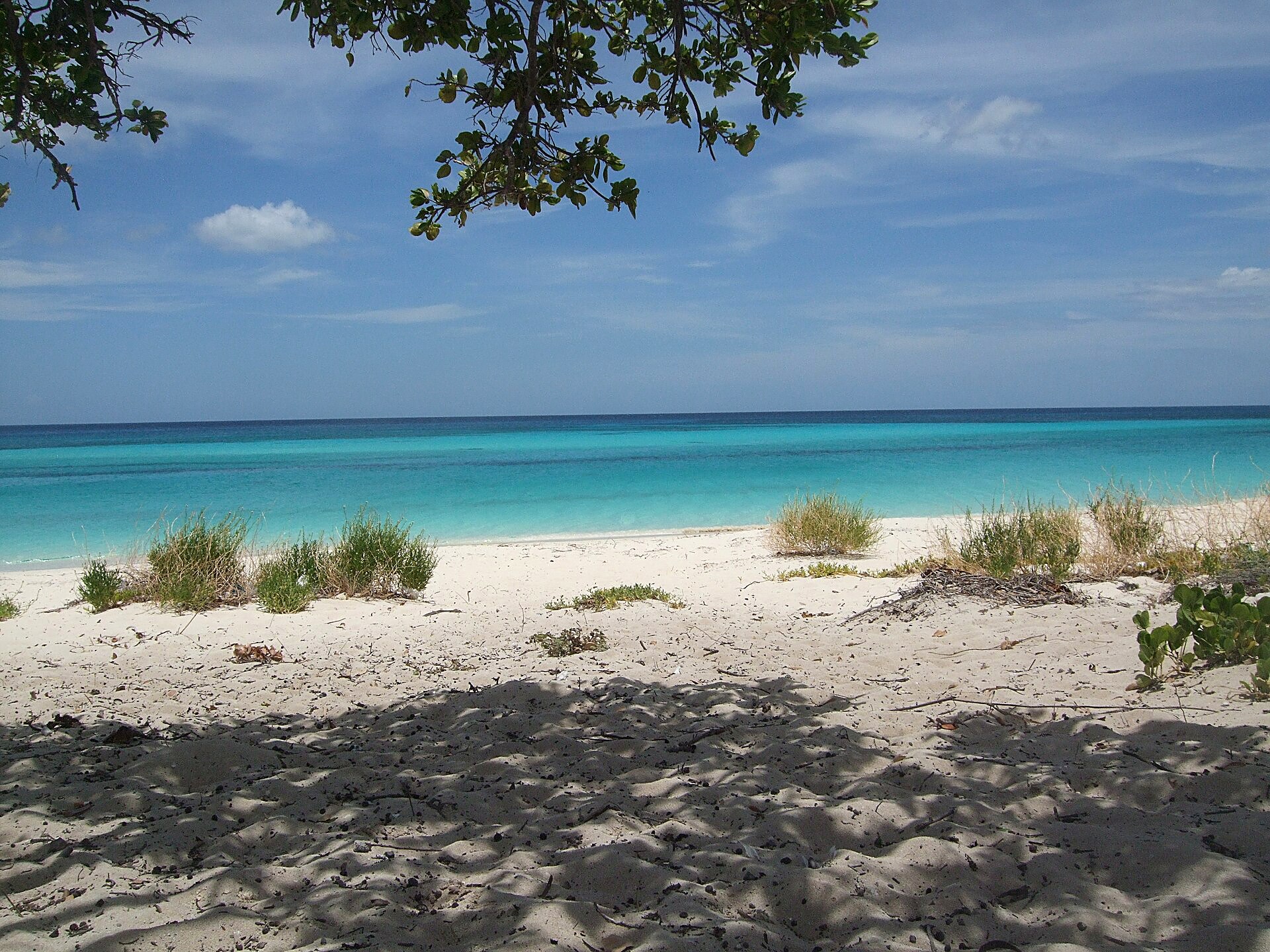
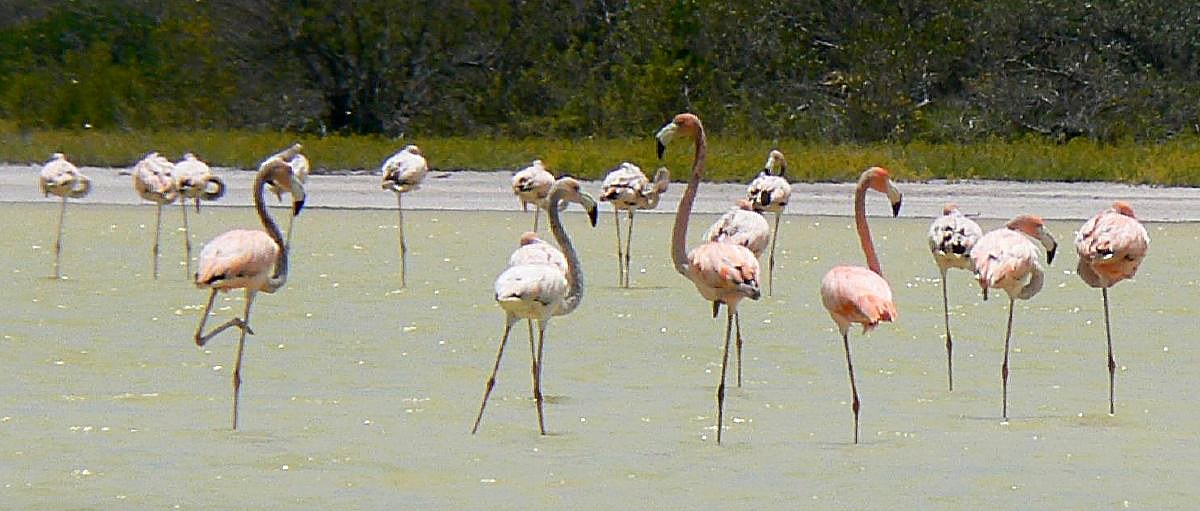
The country's far southwest corner, where the map runs out: one of the Caribbean's great untouched beaches inside a national park, a flamingo lagoon, a red-cliffed cape — and, since 2024, a brand-new cruise port bringing the world to a province that barely saw visitors before. This guide combines its beaches, towns, food, nature and activities into one visit.
Every destination guide in the network follows the same five categories, so visitors can combine a trip the same way in any province.
Roughly eight kilometres of white sand and clear water inside Jaragua National Park, regularly called one of the finest beaches in the Caribbean — and still empty: no hotels, no buildings, reached by a short boat ride from La Cueva or a rough park track. Sea turtles nest on these shores (roughly May to October; leatherbacks earlier in the year).
Protected · Boat accessWhite sand under rust-red bauxite cliffs — the beach at the cape that names the area, about 15–20 minutes south of Pedernales town, beside the new cruise port and on the way to La Cueva.
Red cliffsThe fishermen's cove where the boats for Bahía de las Águilas leave — a working shore of boats and nets rather than a swimming beach, and the natural starting point of the province's great day out.
Boat launchThe provincial capital: a quiet border town at the end of the country's longest drive, with small hotels, seafood restaurants and the slow pace of a place the tour buses never reached — the land base for everything in this guide.
Base townThe town on the highway east of the port, gateway to the Laguna de Oviedo — and the area of the province's new international airport, under construction and not yet open.
Lagoon gatewayThe port itself is open and working — its pools and shops serve cruise passengers on ship days. The resort city planned around it (a public-private project of roughly US$2.2 billion, with a cap of some 12,000 rooms by about 2033) is under construction: as of 2026 its first large hotels are reported to be nearing completion but none is open yet. Presented as context — the development has its own coverage on realestate.dominicana.com.
ContextFishing is the province's old economy: in Pedernales town and at La Cueva, the small restaurants cook what the boats brought in — whole fish, and lobster and conch when they are in season. Ask what came in today; that is the menu.
SeafoodAway from the shore, the town comedores serve the national table — la bandera at midday, mangú in the morning, sancocho on Sundays — at local prices, in a town that until now cooked almost entirely for itself.
ComedoresNamed restaurants join this guide only when the network's restaurant directory opens on hotel.dominicana.com — verified, with the selection criteria published. Nothing is listed here before then.
In preparation1,374 km² of dry forest, coastline and sea, protected since 1983 and a UNESCO biosphere reserve — one of the Caribbean's great wild parks, holding Bahía de las Águilas, the Oviedo lagoon and the offshore islands of Beata and Alto Velo.
National parkA large saltwater lagoon inside the park, visited by boat with local guides — famous for its flamingos, its birdlife and its rhinoceros iguanas on the shore. About 45–60 minutes east of the port by road.
Flamingos · IguanasBehind the dry coast the land rises into the Sierra de Bahoruco, where the Hoyo de Pelempito — a vast sinkhole some 700 m deep — opens in the mountainside, with a viewpoint over the collapsed valley. The province's high, green counterpoint to its beaches.
MountainsThe signature excursion, by land or by ship: drive to La Cueva and take a local boat along the park coast to the great empty beach. Independent operators list their own tours on hotel.dominicana.com as the directory opens.
SignatureHow most of the world now meets Pedernales: the ship docks at the pier — no tender — and the day divides between the port's own pools and shops, the red cliffs of Playa Cabo Rojo, and excursions into the park. Check your own ship's schedule; calls run all year, most often from October to April.
Port dayFrom the visitor center east of Oviedo, local guides run small boats across the Laguna de Oviedo — flamingos feeding in the shallows, iguanas on the shore, and the park's birdlife all around.
BirdwatchingThe mountain half-day: up into the Sierra de Bahoruco to the rim of the Hoyo de Pelempito, where the viewpoint takes in the whole collapsed valley — pine forest and cool air above the dry coast.
ViewpointHow the five categories combine into one visit — based in Pedernales town, out to the cape, the great beach, the lagoon and the mountains.
The long drive in is part of the trip — settle into a small hotel in town, then out to the red bauxite cliffs and white sand of Playa Cabo Rojo, past the new port.
To La Cueva in the morning and the boat along the park coast — a full day on the empty beach. Bring everything: there is nothing to buy on that sand.
East to Oviedo and the boat across the salt lagoon — flamingos in the shallows, iguanas on the shore, and the park's quieter, greener side.
Up into the Sierra de Bahoruco to the Pelempito viewpoint before the long road back — the province in one look: dry coast below, green sierra above.
Example itinerary — illustrative only. Actual travel times, excursions, seasonal availability and accommodation should be verified before booking. Note in particular: the Cabo Rojo resort hotels are not open yet — land stays are in Pedernales town's small hotels; cruise calls follow each line's own schedule.
The trip builder is the planned interactive step: answer four questions and the guide drafts an itinerary from the verified listings of the network — stays and independent tours from hotel.dominicana.com, dates from events.dominicana.com. It arrives after the hotel directory opens; this panel shows the questions it will ask.